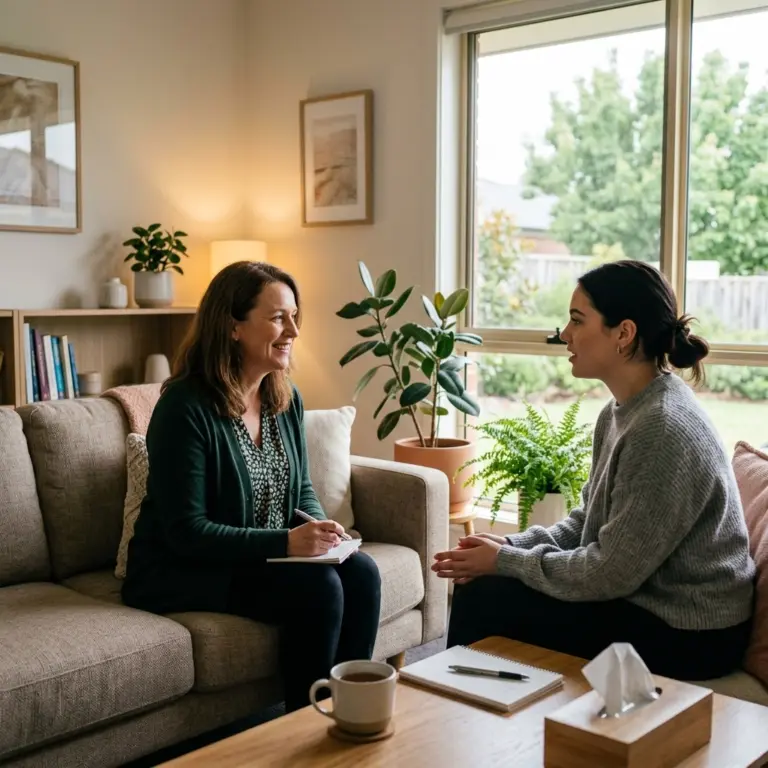

If you are thinking about seeing a psychologist, it is natural to wonder what happens in a session. Psychology is a broad field, and the support you receive depends on your concerns, preferences and goals. This guide explains what psychologists do, what a first appointment may involve, and how to choose a convenient location.
WHAT DOES A PSYCHOLOGIST DO?
A psychologist is a trained, registered health professional who works with people to understand thoughts, emotions and behaviour. You might seek support for anxiety, low mood, stress, grief, relationship difficulties, life changes or other concerns.
Psychology sessions may involve:
- Talking through what has been happening and what matters to you.
- Exploring patterns in thoughts, feelings and behaviour.
- Identifying goals for your sessions.
- Learning and practising strategies that suit your needs.
- Reviewing progress and adjusting the approach together.
Some psychologists also provide assessments. An assessment may help explore a specific question, such as whether someone has ADHD or autism. The process and outcome vary depending on the referral question and the individual. An assessment does not guarantee a diagnosis.
A psychologist’s approach should be discussed with you. You can ask what a suggested approach involves and raise questions at any stage. To learn about IHM’s individual psychology services, visit the service page.

PSYCHOLOGY AND COUNSELLING: WHAT IS THE DIFFERENCE?
Psychology and counselling can both offer a supportive space to discuss challenges and consider next steps. The right option depends on what you are looking for, the practitioner’s training and experience, and the kind of support that feels appropriate to you.
In Australia, the title “psychologist” is protected. Psychologists must be registered with the Psychology Board of Australia, which is supported by AHPRA. You can check a practitioner’s registration through the AHPRA public register.
Counsellors may have a range of qualifications and professional memberships. Counselling can provide a place to talk, reflect and work through concerns. For more information, Healthdirect explains counselling and counsellors.
Neither option is automatically better for everyone. If you are unsure which service fits your needs, you can ask the practice about the practitioners’ qualifications and areas of work before making an appointment.
WHAT TO EXPECT AT YOUR FIRST PSYCHOLOGY SESSION
The first appointment is usually a chance for you and the psychologist to understand what brings you in and consider how to proceed. You do not need to have everything worked out beforehand, and you can share information at a pace that feels manageable.
Your psychologist may ask about:
- What has been concerning you and how it affects day-to-day life.
- Your priorities or hopes for support.
- Relevant personal or health history.
- Support you have tried before, if any.
- Practical matters, such as appointment preferences.
You can also ask about the psychologist’s approach, fees, privacy, and what future sessions might involve. Your psychologist should explain confidentiality and its limits, including circumstances where information may need to be shared for safety or legal reasons.
A first session is not a test. If a question feels difficult, you can say so. You and your psychologist can discuss what feels comfortable and agree on next steps together. The Australian Psychological Society’s guide to a first session offers more general information.

CHOOSING A LOCATION: CROYDON, LILYDALE OR CLYDE NORTH
The best location is often the one that fits your travel, schedule and access needs. IHM offers psychology appointments across several locations. You can explore the options below and ask about current availability before booking.
- Croydon: If you live or work nearby, visit the Croydon psychologist and psychology services page for location and service information. Searching for a psychologist Croydon or psychology Croydon may help you find local options.
- Lilydale: For people in Lilydale and nearby areas, the Lilydale psychology service page outlines the local option. If you are looking for psychology Lilydale or a psychologist Lilydale, consider whether this location suits your routine.
- Clyde North: The Clyde North psychology page provides details for the south-east. If you are searching for psychology Clyde North or a psychologist Clyde North, you can contact the team to ask about the service and appointment availability.
You do not need a referral to make a private appointment. If you want to explore whether a Medicare rebate may apply, speak with your GP about whether a GP Mental Health Care Plan and referral are relevant to your circumstances. Eligibility and rebates depend on the current Medicare requirements and your individual situation. Check fees and any expected out-of-pocket costs with the practice before booking.
CAN YOU SEE A PSYCHOLOGIST BY TELEHEALTH?
Telehealth may be an option if travel is difficult or you prefer to attend from home. A video appointment can offer a way to speak with a psychologist remotely, subject to availability and suitability for your needs.
Before choosing telehealth, consider whether you have a private space and a reliable internet connection. You can ask the practice about appointment formats, privacy arrangements and any requirements for your session. If you are considering Medicare rebates, confirm the relevant referral and eligibility requirements with your GP and the practice.

A SIMPLE CHECKLIST BEFORE YOU BOOK
Use this general-information checklist to prepare for an appointment. It is not a diagnostic tool, and you do not need to have every answer ready.
- What would I like to talk about?
- Is there anything I want the psychologist to know before we meet?
- Do I prefer an in-person appointment or telehealth?
- What questions do I have about the psychologist’s approach, fees or privacy?
- If I am interested in Medicare rebates, have I asked my GP about the relevant plan and referral?
You can keep this checklist for your own use or ask IHM whether a printable version is available. If you contact the practice to request information, provide only the details needed to respond, such as your name and email address.
FREQUENTLY ASKED QUESTIONS
Do I need to know what is wrong before seeing a psychologist?
No. You can book even if you are unsure how to describe what is happening. Part of the first session may involve working out what you would like support with.
Do I need a referral?
A referral is not needed to book a private appointment. Medicare rebates have separate eligibility and referral requirements, so ask your GP and the practice what may apply to you.
How do I know if a psychologist is registered?
You can check a psychologist’s registration using the AHPRA public register. You can also ask the practice about qualifications and areas of work.
What if I am not sure which IHM location to choose?
Consider which location is easiest for you to reach and ask about available appointment times and formats. You can also enquire about telehealth.
BOOK NEAR YOU
Your experience matters, and choosing to enquire does not commit you to ongoing sessions. IHM provides psychology services in Croydon, Lilydale and Clyde North. Contact the team to ask about appointment options, fees and whether a particular service may suit your needs.
- Explore psychology appointments in Croydon
- Explore psychology appointments in Lilydale
- Explore psychology appointments in Clyde North
Book online or call 1300 947 477. Reaching out is a first step, not a commitment.