
CONTENT FOR REVIEW: REPLACES THE LIVE POST “Can Trauma Counselling Really Help You Move Forward After Years of Pain? Find Out Here”
Experiencing trauma can affect how you feel, think, relate to others and manage everyday life. Sometimes the effects appear soon after an event. At other times, they become more noticeable months or years later.
Trauma counselling in Croydon can provide a private, respectful space to talk about what you are experiencing. You do not have to explain everything at once. Your sessions can be guided by your comfort, priorities and individual needs.
Book near you
You do not need to be ready to talk about everything. You can start with a conversation. No referral is needed for a private appointment.
Book online or call 1300 947 477.
Our psychologists in Croydon are at Suite 3, 19 Lacey Street, Croydon VIC 3136 — street parking, one flight of stairs, and Croydon station on the Lilydale line. Appointments are also available at our Lilydale, Mitcham and Clyde North clinics, or by secure telehealth.
Free checklist: Grounding and Calming
Download a free one-page checklist of grounding and calming techniques you can use when memories or distress feel overwhelming. Enter your email and we will send it straight to you — download the free checklist.
If you are in immediate danger, call 000. For crisis support, contact Lifeline on 13 11 14. For domestic and family violence support, contact Full Stop Australia on 1800 943 539.
WHAT YOU MIGHT BE NOTICING
Trauma can affect people in different ways. You may notice:
- Feeling tense, alert or easily startled.
- Changes in sleep, concentration or energy.
- Avoiding people, places or situations that remind you of a difficult experience.
- Unwanted memories, thoughts or feelings.
- Feeling disconnected, numb or emotionally overwhelmed.
- Changes in mood, confidence or sense of safety.
- Difficulty trusting others or maintaining relationships.
- Increased worry, irritability or sadness.
- Physical stress responses, such as a racing heart or muscle tension.
These experiences can have several possible causes. Only a qualified professional can diagnose a mental health condition, including post-traumatic stress disorder (PTSD). A psychologist, psychiatrist or other qualified health professional can discuss your concerns and explain the support options that may be appropriate.
You do not need to wait until your experiences feel severe before asking for help. You can contact a mental health professional when you are ready.
HOW TRAUMA COUNSELLING MAY SUPPORT YOU
Trauma counselling is not about forcing you to revisit painful experiences before you are ready. It can begin with understanding your current concerns, identifying what you need and considering ways to support your wellbeing.
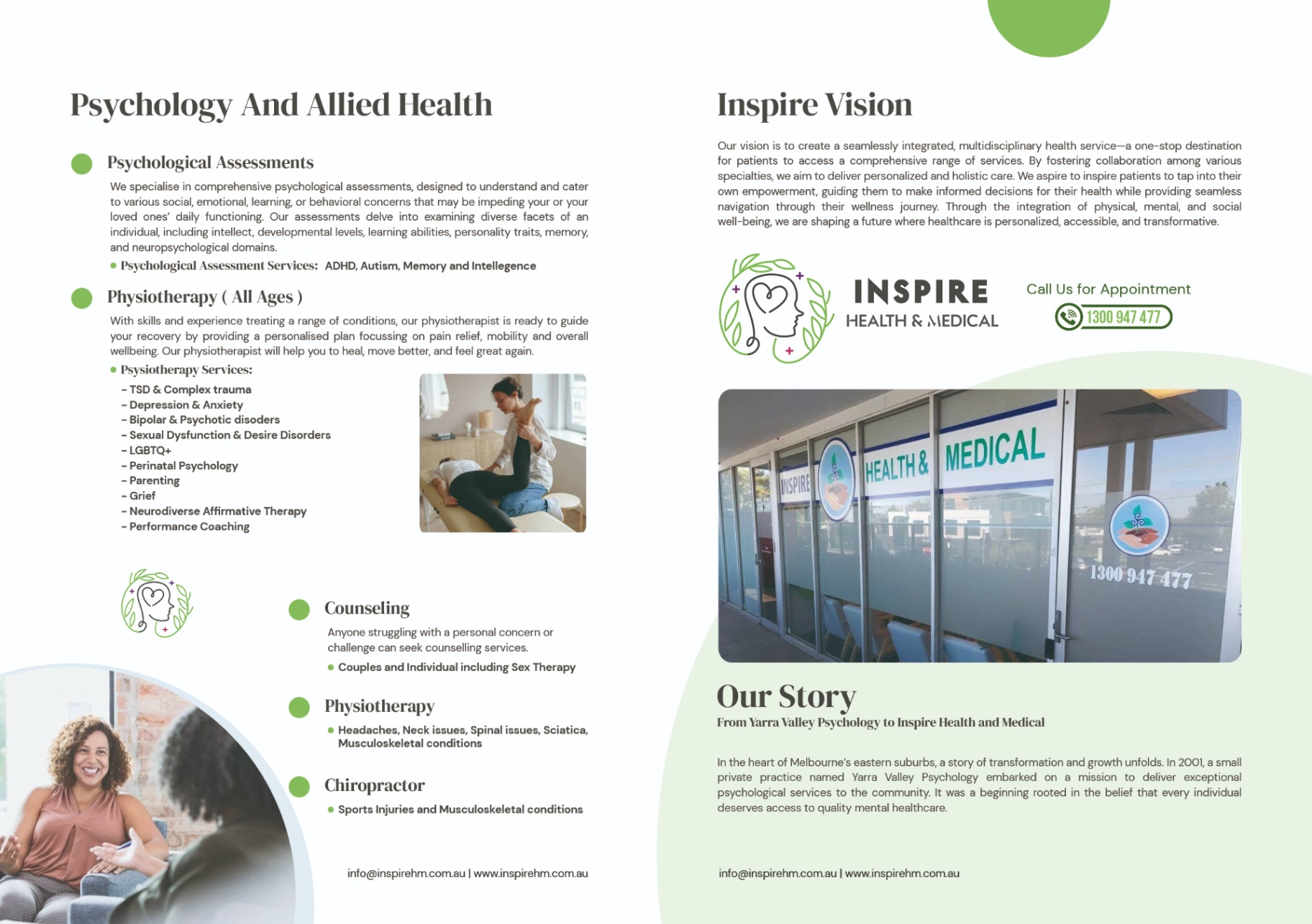
At Inspire Health and Medical, counselling and psychology sessions are tailored to the individual. Depending on your circumstances and the clinician you see, sessions may focus on:
- Understanding emotional and physical responses to stress.
- Developing practical coping strategies.
- Supporting emotional regulation.
- Exploring patterns of thoughts, feelings and behaviour.
- Strengthening communication and relationships.
- Working with grief, anxiety, depression or life changes that may occur alongside trauma.
- Building a clearer understanding of your needs and personal boundaries.
Different therapy approaches may be discussed. These can include:
- Cognitive behavioural therapy (CBT): explores connections between thoughts, feelings and behaviours.
- Acceptance and commitment therapy (ACT): may focus on accepting difficult internal experiences while identifying values and meaningful actions.
- Narrative therapy: considers how people understand and describe their experiences and identity.
- Solution-focused therapy: focuses on goals, existing strengths and practical steps that may be useful now.
The approach used depends on your situation, preferences and the professional assessment of your needs. You can ask questions about any proposed approach before deciding whether it feels suitable for you.
You can learn more about our individual psychology services and meet the professionals involved through our clinicians.

WHAT TO EXPECT IN A FIRST APPOINTMENT
Your first appointment is an opportunity to discuss what has brought you to counselling and what you would like support with. You can share as much or as little detail as feels manageable.
Your clinician may ask about:
- Your current concerns.
- How your experiences are affecting daily life.
- Your goals for counselling.
- Your physical and emotional wellbeing.
- Previous support or treatment.
- Any immediate safety concerns.
- Practical matters, such as appointment preferences and privacy.
You can let the clinician know if a question feels difficult or if you need to pause. It is reasonable to ask how information is stored, how confidentiality works and when information may need to be shared to protect someone from serious harm.
There is no single correct number of sessions. Some people seek short-term support, while others prefer ongoing sessions. The length and frequency of counselling depend on your individual needs, goals and preferences. You and your clinician can review the plan over time.
No referral is needed to self-refer for counselling. Sessions are self-directed, and you can contact the clinic to discuss the service that may be appropriate for you. If you are seeking a Medicare rebate for psychology, a GP referral or Mental Health Care Plan may be relevant. Eligibility requirements apply.
For information about assessments, visit our psychological assessments service. If trauma has affected a relationship or family, you can also explore couples and family therapy.
SUPPORT FOR DIFFERENT NEEDS
Trauma can affect people of every age, background and identity. Your care should respect your experiences, culture, identity, communication style and personal choices.
In addition to individual trauma counselling, Inspire Health and Medical provides support across psychology, counselling and allied health services. Depending on your circumstances, you may wish to ask about:
- Support for anxiety, depression, grief and life transitions.
- Parenting and family support.
- Neurodiversity-affirming care.
- Women’s health services.
- Student counselling options through the student counselling program.
- Services and information relevant to NDIS participants.
If you are unsure where to start, you can contact the clinic and explain what kind of support you are considering. A team member can discuss the available pathways without requiring you to make a clinical decision on your own.
OUR CROYDON CLINIC
The Inspire Health and Medical head office is located at:
Suite 3, 19 Lacey Street
Croydon VIC 3136
Street parking is available. There is one flight of stairs into the clinic. Croydon station is on the Lilydale train line.
You can ask about face-to-face appointments and other available options when you enquire. You can also learn more about psychology in Croydon before making an appointment.
FEES
The following fees apply to the listed services:
| Service | Fee | Medicare rebate | Out-of-pocket amount |
|---|---|---|---|
| Clinical Psychology | $265 | $149 | $116 |
| General Psychology | $215 | $102 | $113 |
| Counselling / Provisional Psychologist | $125 | – | – |
| Counselling / Provisional Psychologist after hours | $135 | – | – |
| Accredited Mental Health Clinician, 50-minute session | $200 | – | – |
Medicare rebates depend on eligibility and the relevant referral or Mental Health Care Plan requirements. Counselling and provisional psychology fees listed above do not include a Medicare rebate. Bulk billing is not included in the fees listed here.
For current information, review our fees and charges page or ask the clinic before booking.
FREQUENTLY ASKED QUESTIONS
1. Do I need a referral for trauma counselling?
No referral is needed to self-refer for counselling. Sessions are self-directed. A GP referral or Mental Health Care Plan may be relevant if you are seeking a Medicare rebate for psychology.
2. Do I need to describe everything that happened?
No. You can decide what you are ready to discuss. A first appointment may focus on your current concerns, goals, safety and what support may be useful. You can tell your clinician if you need to slow down or pause.
3. Can trauma counselling diagnose PTSD?
Counselling alone does not necessarily involve diagnosis. Only a qualified professional can diagnose PTSD or another mental health condition. If diagnosis is relevant, you can discuss this with an appropriately qualified psychologist, psychiatrist or medical practitioner.
4. Which therapy approach is right for me?
There is no single approach that suits everyone. CBT, ACT, narrative therapy and solution-focused therapy are examples of approaches that may be discussed. The choice depends on your needs, preferences and the clinician’s professional assessment.
5. How many appointments will I need?
This varies between individuals. Some people seek a small number of sessions, while others prefer ongoing support. Your clinician can work with you to review your goals and decide what feels appropriate over time. Counselling cannot guarantee a particular outcome.
WHEN TO SEEK URGENT SUPPORT
Trauma-related distress can sometimes feel overwhelming. If you are in immediate danger, call 000. For crisis support, contact Lifeline on 13 11 14. For domestic and family violence support, contact Full Stop Australia on 1800 943 539.
You can also read general information about PTSD through Healthdirect. These resources do not replace an individual assessment or professional care.
Book near you
No referral is needed to start. Book online or call 1300 947 477, or read more about our psychologists in Croydon.
BOOK TRAUMA COUNSELLING IN CROYDON
Your experience matters, and you can seek support at your own pace. No referral is needed to contact the clinic about counselling. Our team can help you understand the available options and choose a starting point that fits your needs.
To enquire about trauma counselling in Croydon, call 1300 947 477 or book an appointment online. We are here to support your next step with care, privacy and respect.